

WHAT ARE YOU LOOKING FOR?
SURF AND ENJOY
Our Surfcamps are for you whether you've never surfed before or you already have experience. We separate groups by level so that you can enjoy and progress from where you are. Choose the format and date that best suits you.
-
Weekend Surfcamp
Next date: Nov 20–22 7 places availableRegular price From €209,00 EURRegular price -
All Saints' Surfcamp
Next date: Oct 30–Nov 2 6 places availableRegular price From €399,00 EURRegular price -
New Year's Surfcamp
Next date: Dec 29–Jan 3, 2027 6 places availableRegular price From €599,00 EURRegular price -
Andalusia Day Surfcamp
Next date: Feb 26–Mar 1, 2027 9 places availableRegular price From €399,00 EURRegular price -
Easter Surfcamp
Next date: 24–28 Mar 2027 9 places availableRegular price From €499,00 EURRegular price


TRAIN AND PROGRESS
If you already surf and want to work on your surfing more specifically, our Surf Coaching programs are designed for that. With Miguel Rodríguez, a former competitor and coach with over 15 years of experience, we take a closer look at your surfing to understand what’s happening and what you can work on to improve.
-
Surf Coaching Camp
Next date: Oct 16–18 2 places availableRegular price From €299,00 EURRegular price -
Surf Coaching Sessions in El Palmar
Regular price From €48,00 EURRegular price -
Intensive Surf Coaching
Regular price From €275,00 EURRegular price -
Online Surf Coaching
Regular price €95,00 EURRegular price

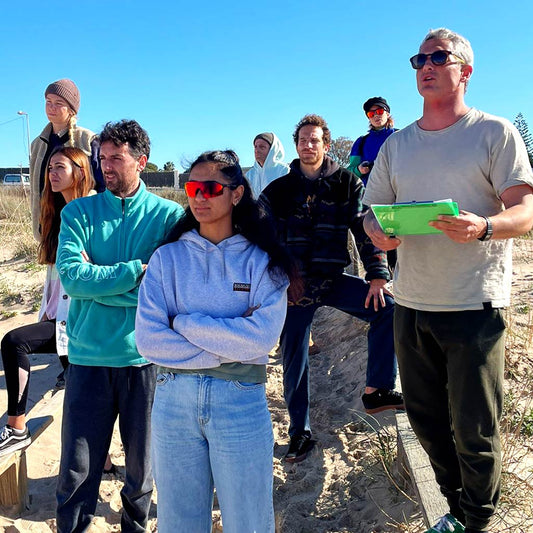


A WEEK TO EXPERIENCE SURFING IN EL PALMAR
Feb 7–13, 2027 · 9 spots available · Free pre-registration
Seven days to get into the rhythm of the ocean, surf consistently, gain confidence in the water, and share the Surfhouse with like-minded people.
LEARN AND KEEP MOVING FORWARD
Whether it's your first time or you've taken several classes before, we adapt to your level. You can learn in a group or choose a private class if you're looking for more personalized attention.
-
Group Surf Lessons in El Palmar
Regular price From €35,00 EURRegular price -
Private Surf Lessons in El Palmar
Regular price From €60,00 EURRegular price

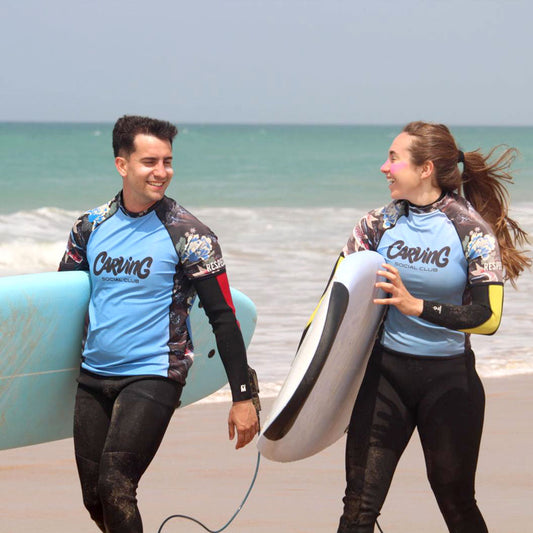

GET TO KNOW THE SURFHOUSE
Our Surfhouse is the home of Carving Social Club in El Palmar. Located about 900 meters from the beach, it's where the group stays during our Surfcamps and where we share breakfasts, video analysis, training, and a good part of the time between sessions.
THEY TELL IT BETTER THAN WE DO
Surf Blog
Content to prepare for your next surf camp, better understand the conditions in El Palmar, and learn how our way of teaching and training surfing has evolved.
-

De Madrid al Atlántico en unas 4 horas y media:...
Carving Social ClubEl Palmar está bastante más cerca de Madrid de lo que parece. Te contamos las formas más fáciles de llegar: alta velocidad hasta Sevilla, autobús a Conil, vuelo a Jerez,...
De Madrid al Atlántico en unas 4 horas y media:...
Carving Social ClubEl Palmar está bastante más cerca de Madrid de lo que parece. Te contamos las formas más fáciles de llegar: alta velocidad hasta Sevilla, autobús a Conil, vuelo a Jerez,...
-

Flysurf, our softboards for learning and progre...
Jacobo RamírezAt Carving Social Club we have chosen Flysurf as our softboard brand for Surfcamps, lessons and rental in El Palmar. Discover the models we use and how you can try...
Flysurf, our softboards for learning and progre...
Jacobo RamírezAt Carving Social Club we have chosen Flysurf as our softboard brand for Surfcamps, lessons and rental in El Palmar. Discover the models we use and how you can try...
-

A week of surfing in El Palmar | February 7–13,...
Carving Social ClubSeven days to get into the rhythm of El Palmar, gain confidence in the water, and share life in our Surfhouse. First date: February 7–13, 2027.
A week of surfing in El Palmar | February 7–13,...
Carving Social ClubSeven days to get into the rhythm of El Palmar, gain confidence in the water, and share life in our Surfhouse. First date: February 7–13, 2027.
-

Going Solo to a Surf Camp in El Palmar: What to...
Jacobo RamírezComing alone to a surf camp is much more common than it seems. We'll tell you what it's like to arrive without knowing anyone and what happens from the first...
Going Solo to a Surf Camp in El Palmar: What to...
Jacobo RamírezComing alone to a surf camp is much more common than it seems. We'll tell you what it's like to arrive without knowing anyone and what happens from the first...


Everything you need to know before coming to surf with us.
Frequently Asked Questions
Can I go to a Surfcamp alone?
Yes, and it's very common. Many participants arrive without knowing anyone. On the first night, we present the program and do an icebreaker activity; then, the surf sessions, breakfasts, and shared moments help the group connect naturally.
Do I need to know how to surf to come to a Surfcamp?
No. You can come whether you have never surfed or already have experience. We separate groups by level so that sessions start from where you are and you can learn and progress at your own pace.
For what ages are the Surfcamps?
Our Surf Camps are designed for adults. We welcome people of very different ages and backgrounds, mainly united by their desire to surf and share a few days in El Palmar.
What do Surfcamps include?
Each format has a different program. Depending on the experience, it may include accommodation, surf lessons, equipment, breakfast, video analysis, surfskate, barbecue, and other activities. On each Surfcamp's page, you will find exactly what is included on each date.
How do you decide on class schedules?
Schedules are adapted to sea conditions. We take into account the wind, tide, wave size, and the skill level of each group to find the most suitable time to get in the water. At the beginning of the Surfcamp, we also teach you how to interpret the forecast so you understand why we have chosen each schedule.
What happens if the sea conditions aren't good?
The sea dictates. If conditions are not suitable for a safe session, we adapt the program and, when possible, reschedule to find better conditions.
A DIFFERENT WAY TO UNDERSTAND SURFING
Since 2011 we have been looking for ways to improve surfing both in and out of the water. This path has led us to develop our own way of teaching and training surfing, combining technique, preparation, and understanding of the sea. Today we continue to evolve it from our Surfhouse in El Palmar, next to the Atlantic.